The Daily Ant
Myrmecology Dies in Darkness
Category: Reports
-
As our regular readers understand, ants should be highly appreciated. However, there are some animals in nature that have not yet learned this valuable lesson. In a recent paper published in Biodiversity Data Journal, Dr. Brian Brown and colleagues highlight one such unenlightened group of critters: phorid flies.
-
Not much time today to write a whole post, but this article in the New York Times is probably a nice discussion about Dr. Daniel Kronauer and his ant work.
-
Any casual observer of ants has probably discovered that, somehow, ants are able to return to their colony even when walking backwards. A new study in Current Biology by Sebastian Swartz and colleagues has shown just how one ant species, Cataglyphis velox, achieves such accurate navigation. It turns out that foraging workers take little peeks forward every once…
-
I didn’t manage to write a post for today, but a recent study suggests that laziness may not be a bad thing – at least in ants. I guess I managed to write a post for today.
-

It may be Friday the 13th, but this article is talking about some lucky ants. Canopy ants, in particular. Ants that forage in trees exhibit a high level of ecological dominance, and ants are usually the most conspicuous organisms running around on tree trunks and branches, especially in tropical forests. This begs the question: Why?…
-
I just completed a 4-minute lightning talk on my recent work with Dr. Corrie Moreau on defensive trait evolution in ants, in the final session of talks at the SSB 2017 Standalone Meeting in Baton Rouge! For more information, see the published paper in Evolution and/or the brief blurb I wrote about it on U. Chicago’s ScienceLife blog. — The…
-
A video message from Baton Rouge!
-
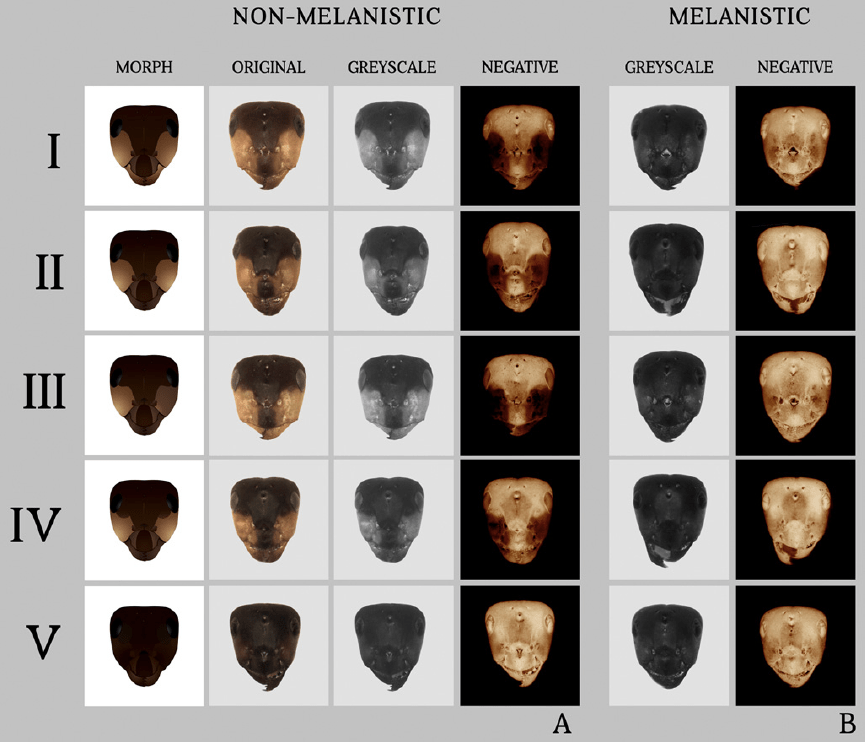
A recent study by Oksana Skaldina and Jouni Sorvari looked at head coloration in ants as a possible metric for the level of disturbance in European boreal coniferous forests. The researchers, both from the University of Eastern Finland, compared the level of melanization in the heads of queens in the wood ant species Formica aquilonia in native versus disturbed forest habitats. Notably,…
-
Trap-jaw ants are awesome – few dispute this fact. Yet despite the remarkable nature of the trap-jaw mandibular structure, quantitative assessments of predator-prey interactions and ecology in this group are fairly rare. This is particularly surprising given that trap-jaw ants are an ideal system for understanding how morphological structures vary within species across a wide geographic range. Recognizing…
-
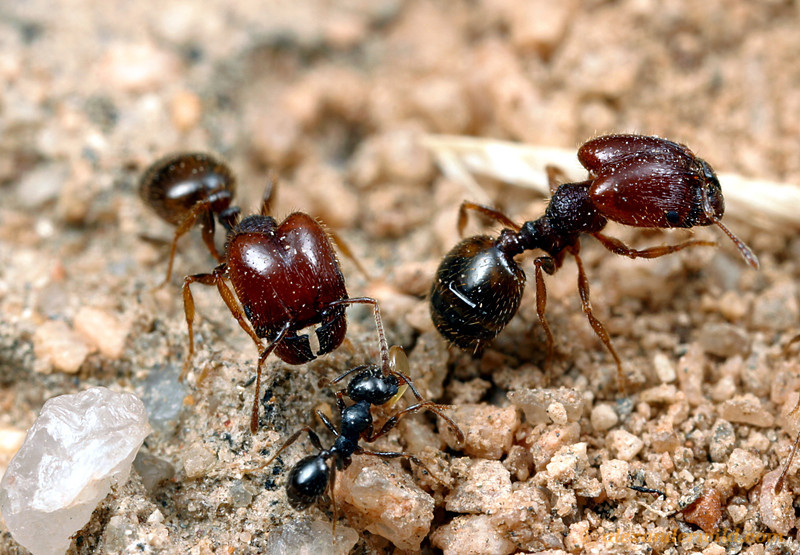
Pheidole is one of the most diverse ant genera in the world, with 1,004 currently described species. This genus is known for having two worker castes – a “minor” and a “major”. The major caste typically sports a head that is comically larger than minor heads. You can see why Pheidole species are called the “big-headed ants”: This ant group…
-
Regular readers of The Daily Ant likely already know that ants are very good at most things. From farming to construction to warfare, ants are rivaled perhaps only by humans. So, it is not surprising that along with a diverse array of interesting and intriguing behaviors, ants are also excellent at something we humans find a little…
-
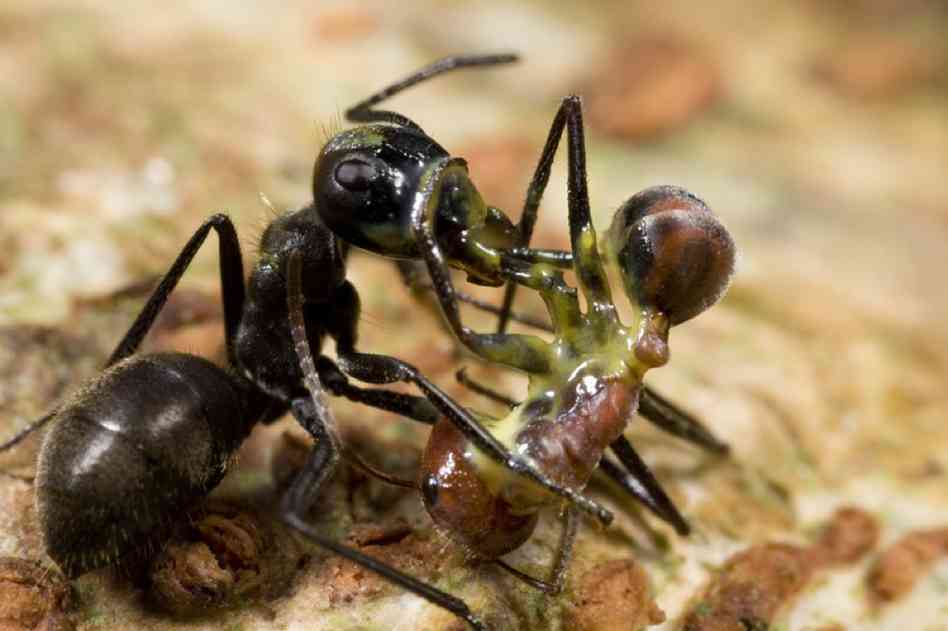
Believe it or not, the title of this article is not clickbait. This ant is Colobopsis saundersi:
 The Daily Ant