The Daily Ant
Myrmecology Dies in Darkness
Category: Reports
-

On this Christmas Day, Americans across the country come together to celebrate the national holiday in their own way. Christians celebrate the birth of Jesus. Agnostics appreciate a day off from work. Myrmecologists dwell on the ants of Christmas Island. This is the location of Christmas Island:
-
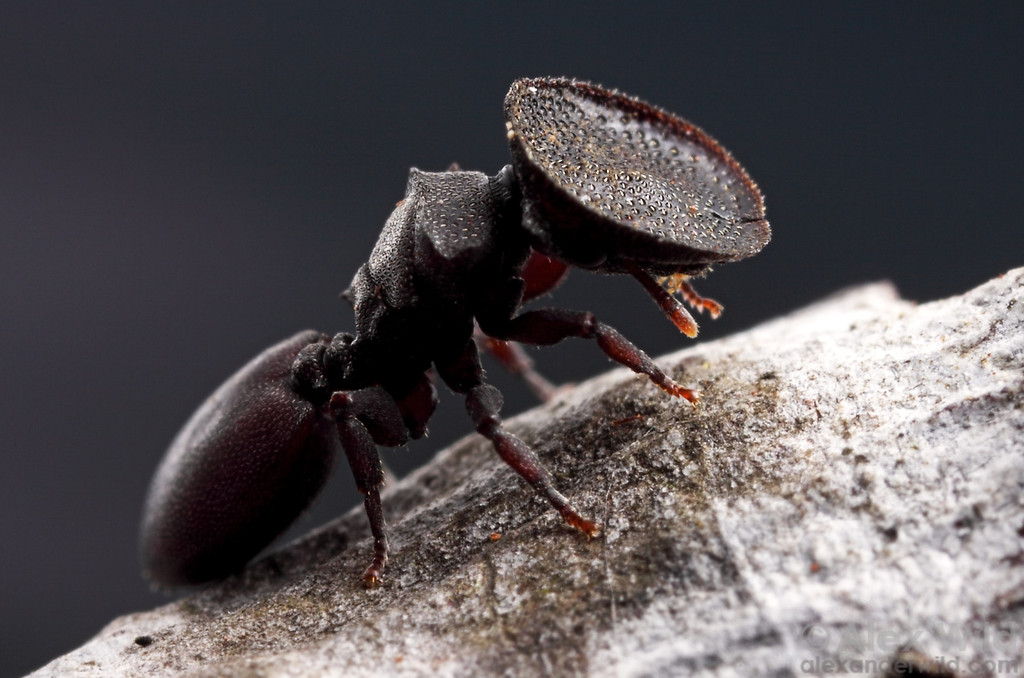
This is a turtle: Many people around the world believe that turtles are boring. This is a turtle ant: Many people around the world believe that turtle ants are fascinating. Reportedly, one of the turtle ant characteristics that people love most is how they use their heads to block their nest entrances. But these turtle ants may also…
-
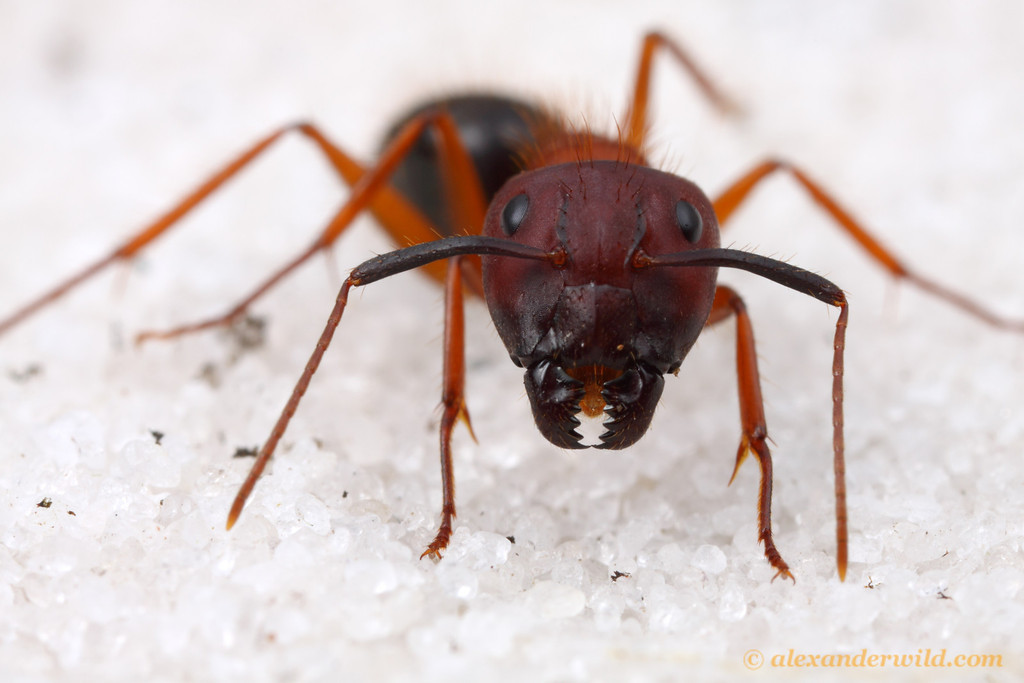
Ant researchers have long known that ants swap food and enzymes orally through a process called “trophallaxis” (tro-fuh-lax-is). Ants use a special organ, the crop, as a kind of “social stomach” – many workers eat food only to regurgitate it into larvae. But a recent study has found that this ant spit may serve another critical purpose: communication.
-

Blue is a rare color in the biological world. It is particularly difficult for most organisms to produce blue pigment, for reasons that are still mysterious, but even structural blue produced by refracting light is fairly rarely seen in nature. This ant doesn’t really care about all that: This ant, Polyrhachis cyaniventris, is metallic blue. Enough said.
-
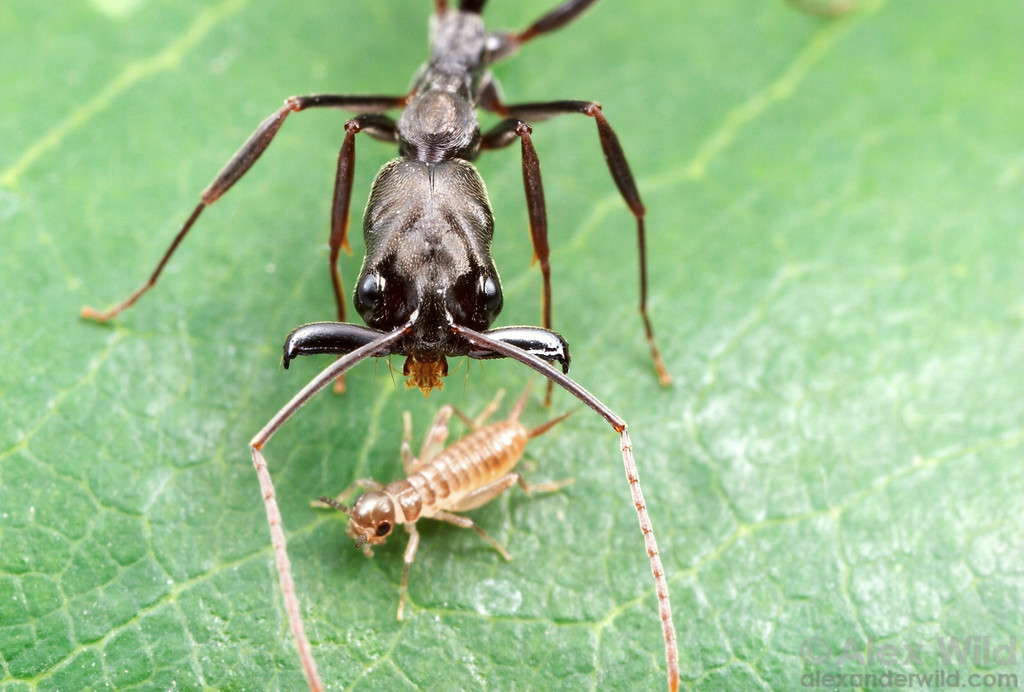
Millions of years before the Wright brothers climbed into their crappy plane, worker ants were already flying around. These ants didn’t have wings. They only had super-powered elastic jaws. Even today, these ants flip through the air, crossing distances greater than 20 times their body length. These ants are Odontomachus.
-

In an exciting new study recently available online in the journal Animal Behaviour, researchers found that two species of ants are selective in their use of tools for liquid food transport. Although tool use in ants has already established in previous studies, the mechanisms involved in tool use selection have rarely been investigated. Dr. István Maák and colleagues found that…
-

Several human societies adopt nomadic lifestyles. From Yugurs on the Asian steppe to the Beja in northern Africa, these cultures traditionally gather food by tracking changing resources rather than relying solely on stable but geographically restricted food production. Not to be outdone by humans, some ants also exhibit nomadic behavior, most famously the army ants. But in 2008, Volker Witte and Ulrich Maschwitz reported an extraordinary and…
 The Daily Ant