This week’s Philosophy Phriday contribution will be posted a couple days late – we apologize for any inconveniants!
The Daily Ant
Myrmecology Dies in Darkness
-
Poet John Ashbery died late Sunday, at the age of 90. In honor of the polarizing poet, we present his 1979 poem, “Late Echo”:
Alone with our madness and favorite flower
We see that there really is nothing left to write about.
Or rather, it is necessary to write about the same old things
In the same way, repeating the same things over and over
For love to continue and be gradually different.Beehives and ants have to be re-examined eternally
And the color of the day put in
Hundreds of times and varied from summer to winter
For it to get slowed down to the pace of an authentic
Saraband and huddle there, alive and resting.Only then can the chronic inattention
Of our lives drape itself around us, conciliatory
And with one eye on those long tan plush shadows
That speak so deeply into our unprepared knowledge
Of ourselves, the talking engines of our day.And Ashbery was antsy to the end. An excerpt from his 2016 poem, “Sitting at the Table”:
It wasn’t always this way.
Somewhere, ants were taking control
of earth’s blistered pulse.
Peanuts were jettisoned from the nacelle
of the montgolfière, all moyenâgeux and thrifty
as it came to be about. I ask only for staples
for my staple gun.
-
The Daily Ant is thrilled to report that the American Museum of Natural History is poised to truly live up to its name. Although announced on January 11, 2017, we were previously unaware of this historic development: AMNH will soon house an insectarium! Marvel at the gorgeous artistic rendering of the plans:
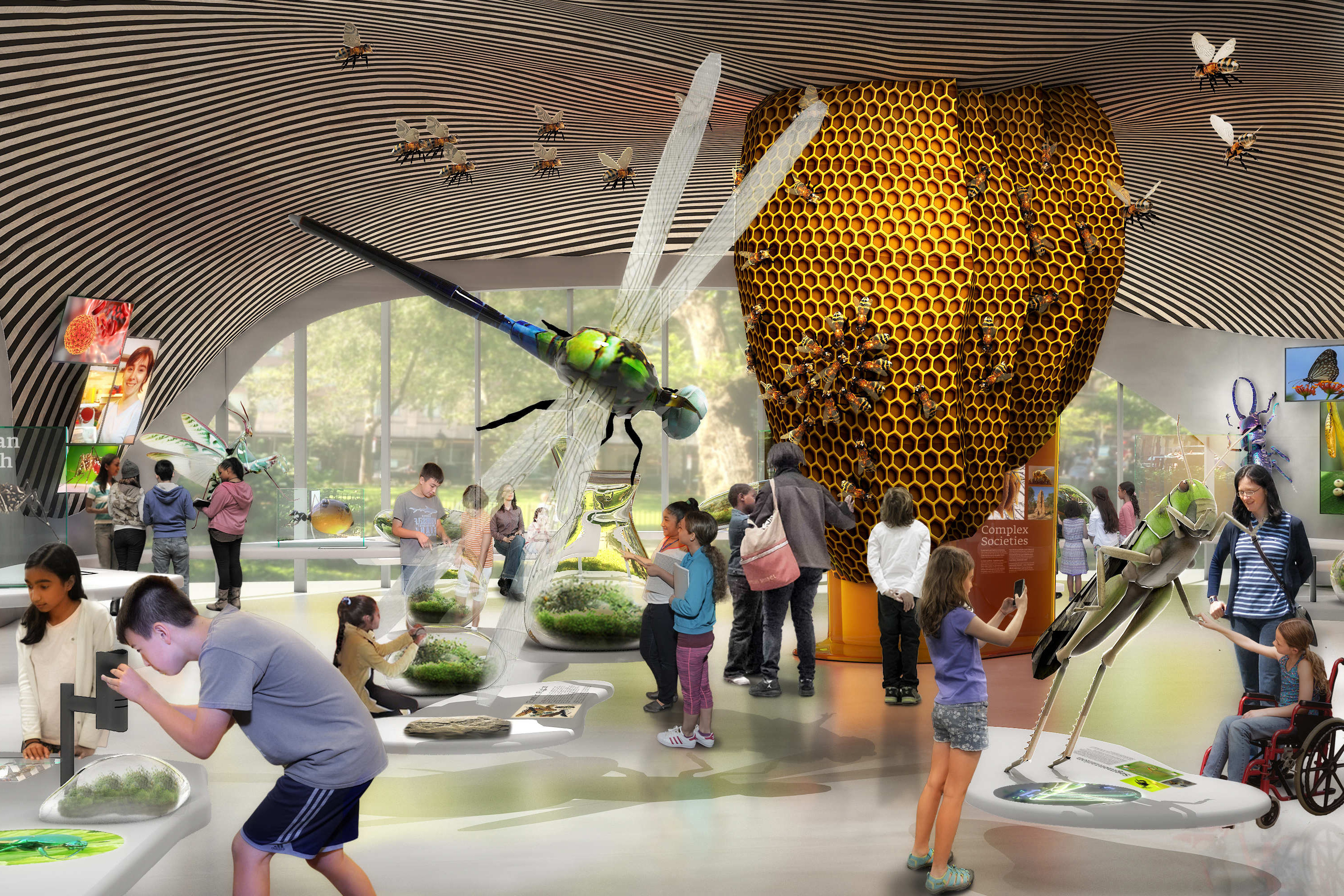
The renovations are led by architect Jeanne Gang, who has strong ties with Chicago, and are expected to be completed in 2020. For more, check out coverage in the New York Post.
Naturally, we anticipate that ants will receive their due in this exhibit. Watch this space in three years for our review!
-
The Daily Ant hosts a weekly series, Philosophy Phridays, in which real philosophers share their thoughts at the intersection of ants and philosophy. This is the twenty-eighth contribution in the series, submitted by Dr. Marc Lange.
Ants Are Alive
Ants are widely reported to be alive. These reports raise an obvious question: What is it for something to be alive?
By this, I do not mean to ask what makes something alive rather than dead. Only a thing that was once alive (or, at least, could have been alive) can be dead. A rock is not dead; it was not ever (and could not ever have been) alive. The question that I am asking is not what distinguishes a living human being from a corpse, when is the moment of death, or is there a moment of death. Rather, the question I am asking is what distinguishes living matter (of which an ant is one example) from non-living matter.
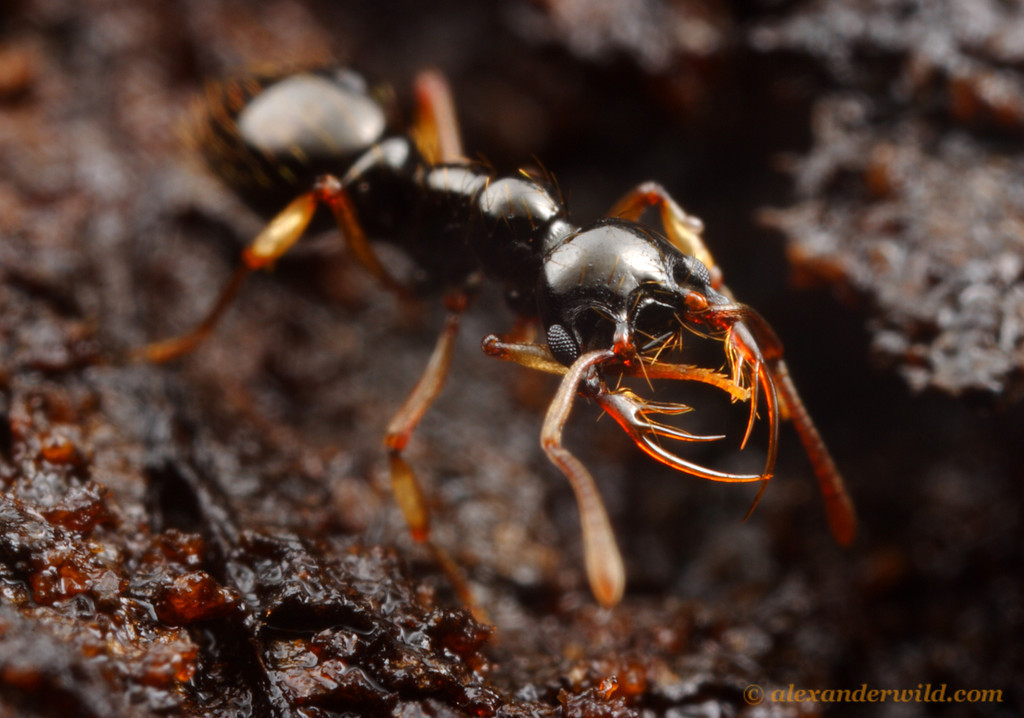
This ant sure looks alive… but is it? Photo: Alex Wild This is an important question for exobiology: the study of life elsewhere in the universe. What are scientists looking for when they are looking for extraterrestrial life? If a future space probe supplies evidence that there is extraterrestrial life somewhere, what will this be evidence for?
As late as the early twentieth century, some scientists believed that living matter is distinguished from non-living matter by what it is made of. According to “vitalism”, living matter contains a vital spark or fluid or some other kind of stuff that is absent from non-living matter. Vitalism was not as outlandish an idea as it might seem to us nowadays. Various subtle fluids were often invoked in nineteenth-century physics, as when heat was regarded as a fluid (caloric) that flows from hotter bodies to cooler ones. Various capacities of living things – e.g., to move, to synthesize various chemical compounds, to reproduce – had not yet been explained in terms of the capacities of ordinary matter. However, the prospect of giving these explanations has since then greatly increased, and as a result, vitalism has become less and less plausible.
Another option is to reject the question of what makes some matter living on the grounds that there is no non-arbitrary place to draw the line between living and non-living matter. Viruses famously seem like living things in some respects but not in others. They are not cellular but they can reproduce — but they cannot reproduce all by themselves. (Nor can I, of course.) They cannot move of their own accord, but some parts of them (such as their injectors) can. They require no nourishment and can essentially last forever if unmolested. Chemical evolution supplies another argument that there is a grey area between life and non-life. If living matter arose from non-living matter, presumably the boundary was not crossed at a particular moment. Rather, matter became increasingly alive.
But even if being living is not an all-or-nothing matter, it can still make sense to ask what it is for something to lie more towards the living end of the spectrum or more toward the non-living end. Even if vitality is a matter of degree, we should try to understand what features contribute toward vitality, placing some matter at some location on the spectrum. Being living or non-living can be like night and day, which also have intermediate stages.
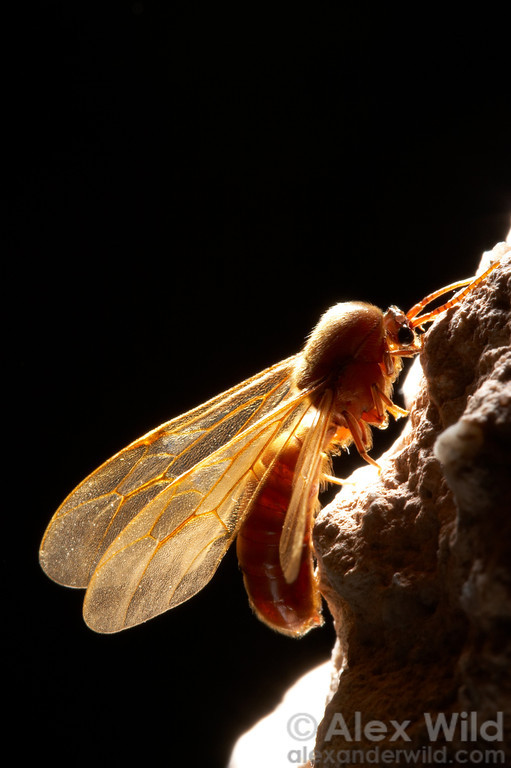
A male army ant at night. But is it alive? Photo: Alex Wild There is another popular option (especially in the boilerplate opening chapters of biology textbooks, which often define biology as “the study of life” and then find themselves facing the uncomfortable question, “What is life?”). It is to go functionalist: some matter is alive to the degree that it can perform various “life functions”, such as reproducing, exchanging energy with its environment, responding to stimuli, organizing the matter that it assimilates into a new form, moving of its own accord, and so on.
Admittedly, many living things do many of these things. But of course, many non-living things do, too. A hurricane takes in matter from its environment and assimilates it into a new form, as does a water wave. They both move. A candle flame “reproduces” (given an unlit candle) and exchanges energy with its environment. A piece of iron responds to the stimulus of being in the presence of oxygen by rusting. The fact that these non-living things possess some of these capacities does not move them even a smidgen toward the living end of the spectrum. Likewise, there are many living things that lack some of these capacities. Yet a sterile “worker” or “soldier” ant is no less alive than its fertile colleagues.
Another problem with functionalism is that there does not seem to be anything that ties the various “life functions” together. They seem to form an arbitrary “laundry list” of capacities that (arguably) are more common among living than non-living things. What is it that makes a given capacity qualify as one of the “life functions”?
Nevertheless, functionalism seems like it might contain some kernel of truth. After all, in a famous Sesame Street sketch, Robin Williams uses functionalist grounds to argue that his shoe is not alive because it cannot eat, breathe, or grow.
Perhaps one step towards understanding what might be correct about functionalism is that the fact that a given thing is alive has sometimes been used to explain why that thing has the capacity to perform a given life function. In the history of science, we can find cases in which scientists explicitly debated whether or not some entity is alive, and the debates focused on whether or not its vitality is the most plausible explanation of some of its capacities. That the heavenly bodies move was once widely believed (even as late as Galileo’s time) to be best explained by their vitality. Likewise, until the mid-nineteenth century, scientists debated whether fungi are alive, and these arguments concerned whether fungi exhibit some “life functions” and, if so, whether the best explanation is that they are living. (It was long unclear, for instance, whether fungi grow, reproduce, or move.)
What would it take for a thing’s vitality to explain why it has various capacities? Perhaps it will turn out that all living things, when they perform their life functions, do so in an importantly similar way that is uncommon among non-living things with these capacities. Of course, this similarity would have to lie at a fairly deep, abstract level. One possibility is that living things perform these functions in a “bottom-up”, “self-organized”, “emergent” way. That is, roughly speaking, although each component (at a fairly basic level) of a living thing is governed by equations that determine its behavior given its environment, there is no such equation for the living thing as a whole. Its final state cannot be computed by some effective procedure, even given its initial state and its surroundings. There are cellular automata (see here) where each component’s next state is determined by a simple rule plus its neighbors’ current states, but where there is no way to predict the overall outcome except by stepping through a simulation of the system.
Perhaps what contributes toward making something living is not merely that it performs a life function, but that it does so emergently. Perhaps what puts a capacity among the life functions is that it can be performed emergently. Perhaps when vitality explains why a living thing can carry out various life functions, the explanation does not supply the precise causal mechanism that the living thing uses, but the explanation nevertheless specifies an important feature of the causal story: that the life function arises emergently.
On the other hand, perhaps there is nothing important that is common to the ways in which living things perform their life functions and that is uncommon among non-living things. Perhaps the notion of vitality is just an outmoded vestige that ultimately has no scientific work to do. Which of these options will prove to be the case is an open empirical question.
 Dr. Marc Lange is the Theda Perdue Distinguished Professor at the University of North Carolina at Chapel Hill, as well as Chair of the UNC Department of Philosophy. Dr. Lange specialized in philosophy of science, metaphysics, and epistemology – check out his description of his own extensive work, in a display of extraordinary adjective diversity, here.
 -
Here at The Daily Ant, we know that so much of the mainstream media enjoys focusing on (allegedly) negative ant characteristics. Our online newspaper actively works to counteract this insidious bias. However, there are a few truly bad actors within the formicid family that deserve genuine condemnation. Fire ants are one of these few bad actors.
Amid the historic and devastating flooding disaster underway in Houston, Texas, many fear for their lives. It is thus understandable that the average citizen is subsequently terrified when, while on a boat in their neighborhood-turned-lake, they encounter this:
Although these are ants, and although a floating raft of ants is objectively amazing in addition to being genuinely terrifying, we strongly condemn any fire ant that attacks a human during these trying times. We also recommend that whether you are a human or a non-invasive ant, you avoid these floating rafts to the best of your ability! And, in solidarity with our vertebrate sisters and brothers, we urge you to donate to the Hurricane Harvey Relief Fund.
Note: We thank several of our readers – Rose, Nathan, Ted, and Jason – for reaching out to us about these ant rafts!
-
Ant Colony Optimization is an excellent example of ant biology directly improving human affairs (in this case, planning delivery routes and other uses). Thus, we were excited to learn that University of Illinois at Chicago graduate student Anika Hazra created an interesting antfographic that introduces the Ant Colony Optimization algorithm and explains its utility! Hazra reached out to us with her premier ant content, and we’re thankful she did:

-
The Daily Ant hosts a weekly series, Philosophy Phridays, in which real philosophers share their thoughts at the intersection of ants and philosophy. This is the twenty-seventh contribution in the series, submitted by Dr. Ryan Kemp.
The Existential Upshot of Crazy Ants
The ant has an ambiguous place in Western literature. We all know Aesop’s classic rendition: the industrious ant measured against his jaunty neighbor the grasshopper. Grasshopper wastes away the summer hours with music and good humor, while Ant sees the writing on the wall: winter is coming and merry-makers fare not well. Ant works while Grasshopper plays and he is rewarded in the end by, well, not starving to death. In one version of the fable Ant gets a little malicious and admonishes his now desperately starving friend to “dance the winter away.” Serves him right, I suppose.
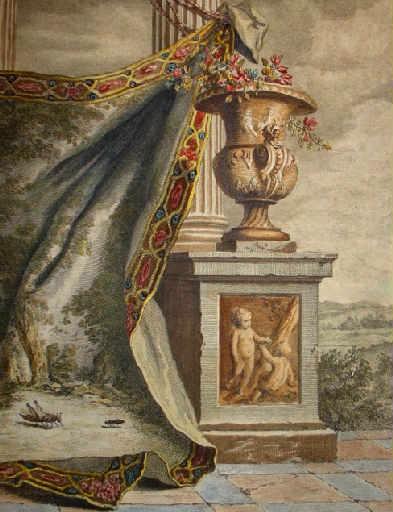
La Fontaine’s Ant and Grasshopper -
Well, the most recent mega Powerball jackpot of $759 million has been claimed.
But did you know? A single supercolony of Argentine ants in southern Europe numbers in the billions, so if this supercolony is the winner, each ant receives less than a dollar. Too bad!

Now THAT’S a Powerball! Image of fire ants, by Georgia Tech/Newsweek -
Yesterday, in addition to breaking a news story about ants and the solar eclipse, The Daily Ant was also informed by Thinker Correspondant Jordan MacKenzie that the cartoon sitcom Rick and Morty recently featured a new character, Million Ants. He apparently developed a relationship with another character in the show, Supernova – as the fan wiki explains: “[Million Ants] states that it was [Supernova’s] beliefs and pursuit of justice that taught him to be a man, not just a sentient pile of ants. Supernova stated that he was ‘always the romantic’.” Furthermore, the wiki notes, their exploits “somehow would come to conceive a child, who was half-star and half-ant, however, this child would not live to see birth.”
For a look at Million Ants’ short-lived appearance on the show, check out this video constructed by a fan (NOTE: Adult Content) [Oct 24, 2017 Update: The video has been taken down – oh well!]:
Correspondant MacKenzie correctly observes that “Ah yes that video is really all you need. The rest of the episode is just filler insofar as it isn’t about one million ants.”
Rick and Morty has featured ants before, in the form of Ants in My Eyes Johnson, but we at The Daily Ant are pleased to see this more substantive inclusion of ant material!
-
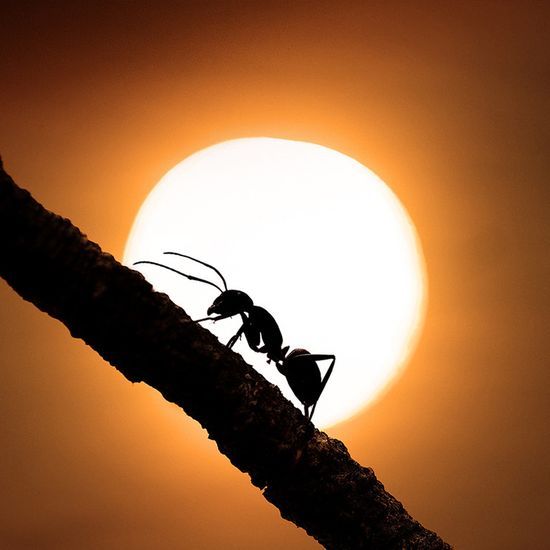
As vertebrates swarm to various destinations throughout the continental United States in order to observe a total eclipse of the sun, experts predict that tens of billions of ants are bracing themselves to stop and remain motionless during the imminent periods of total darkness. This forecast, supported by the scientific literature, should send shockwaves around the country. Instead, most bipedal organisms remain transfixed with eyes peeled upwards towards the wild, blue, ant-free yonder.
-

I’m on the road this week, so today’s Style Saturday will be brief but (formicid) fabulous! Here at The Daily Ant we received a request to look at more myrmecologically-themed menswear. The truth is, while ants may have relatively strict gender roles, creativity, rule-breaking, and self-expression are part and parcel of true human style. To that extent, the looks featured here are not intended to be strictly gendered. That said, there’s nothing wrong with expressing yourself within the confines of some social norms either! So, up this week, some traditional, casual, and formicid-fabulous menswear. Grey Ant sunglasses play off a rainbow ant baseball tee to bring a splash of color to an otherwise neutral look. Classic hoodie, slim-cut jeans, and low-top sneakers balance out the quirkiness of an ant-print watch for a look that says apparel can be antsy and awesome.
H m
hm.comConverse sneaker
macys.comGrey Ant gold glasses
$465 – neimanmarcus.com7 For All Mankind mens slim fit jeans
$225 – harryrosen.comMens leather band watch
zazzle.comAnts Baseball Jersey
cafepress.com -
The Daily Ant hosts a weekly series, Philosophy Phridays, in which real philosophers share their thoughts at the intersection of ants and philosophy. This is the twenty-sixth contribution in the series, submitted by Dr. Sameer Yadav.
Anthropocentrism: A Problem for Neuroethology and Philosophical Theology
As the summer months grow hotter it becomes ant-season inside our home. In search of food and water, a single scout will inevitably end up discovering the smallest drips of water and crumbs we leave behind, and return in legion. Despite the nuisance, I can’t help but be impressed with the intelligence exhibited in their behavior — the directional savvy displayed in where and how our morsels are discovered, the complicated path-finding required for a scout to return to its compatriots with the happy news, the incredible detail of signaling and cooperation involved in the transport and distribution of what they find. Researchers in animal intelligence report that in order for ants to make their way into my house and secure that Nature Valley granola bar, they have to track sun-position, wind direction, and a host of other environmental cues, while choosing the most efficient routes from among various options. They can detect when they are lost and deploy sophisticated search-patterns that require them to draw on recent memory such as backtracking to their last known location. How can creatures with such tiny brains (no offense) and comparatively limited neurological resources (as compared with us) exhibit such complex behavior?

A beautiful brain. Photo: Amador-Vargas et al.


 The Daily Ant