• The Daily Ant hosts a weekly series, Philosophy Phridays, in which real philosophers share their thoughts at the intersection of ants and philosophy. This is the sixty-third contribution in the series, submitted by Dr. Stephen White.


    “The Ant and the Grasshopper” and the Politics of Insect Responsibility

    The ants of Aesop’s fable work all summer gather food to store for the winter. Meanwhile, the grasshopper plays his fiddle, having a good old time and providing some (presumably free) entertainment for the other bugs. When winter comes the grasshopper quickly runs out of food and, starving, appeals to the ants for something to eat. The ants, pointing out that they have what they have because of the work they put in over the summer, tell the grasshopper, in so many words, to fuck off.
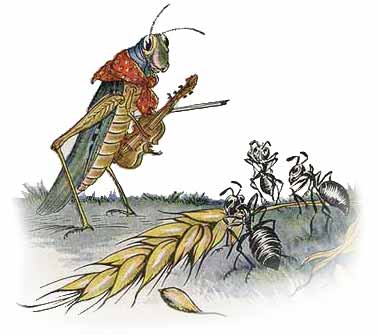
    the-ants-and-the-grasshopper

    Moralists have often taken the lesson to concern the value of prudence. One translation, available on the Library of Congress’s website, ends with the reminder that “there’s a time for work and a time for play.” But such sermonizing about sacrificing short-term pleasures for the sake of your future well-being only makes sense if the underlying political morality of the fable is taken for granted. For suppose we imagine that the grasshopper had every reason to think the ants would share their bounty with him come wintertime. Would there then be anything imprudent or irresponsible in the grasshopper’s musicmaking? To make the case that the grasshopper has behaved foolishly, we have to presuppose that he has no reasonable expectation of assistance from the ants. It is really this assumption, and the ideological framework that lies behind it, that the fable is these days most likely to evoke.

    The ideology that I think “The Ant and the Grasshopper” will most readily call to mind for the modern reader is one which places an ideal of “personal responsibility” at the foundation of political morality. The line is that people need to take responsibility for their choices, and this demand for personal responsibility places constraints on what can count as an adequate scheme of distributive justice. There have, for example, been major reforms, in the last few decades, to the welfare systems in the U.S., Canada, the UK, Australia, and elsewhere, that limit the governmental assistance most people are eligible for, and have strict employment or employment-seeking requirements as conditions of assistance. The Personal Responsibility and Work Opportunity Reconciliation Act, signed into law by Bill Clinton in 1996, limits the federal welfare assistance to two years at a stretch, and five years total, with very few exceptions, in addition to requiring that recipients be actively seeking employment during the time they receive assistance. As the name of the law implies, the fundamental idea behind these requirements is that providing social assistance to people in need is basically in tension with promoting personal responsibility. To encourage a sense of personal responsibility, we need to adopt the position of Aesop’s ants: the grasshopper has made his bed, he should now starve in it.

    In other words, one way to interpret the fable is to see it as expressing something like the following argument:

    1. The grasshopper made the choices he made, and is responsible for the consequences of those choices.
    2. So, if he goes hungry as a result of his lack of preparation for winter, that’s his own fault.
    3. Grasshoppers should suffer the negative consequences of choices for which they are responsible—or, at any rate, no one else has any moral obligation to help relieve them of these burdens, nor would a just legal order require anyone else to provide such help.
    4. Therefore, because the grasshopper is responsible for the position he is in, he should be left to go hungry—or, at any rate, the ants don’t have any moral obligation to provide him food, nor would a just legal order require them to do so.

    The grasshopper has made his choice, and now he has to accept the consequences. On this line of argument, there is something fitting about the ants refusing the grasshopper food. They rightly punish him for his shortsightedness. Or, if that seems extreme, at least they do no wrong in refusing him food. The grasshopper has no claim on them to rescue him from his own irresponsibility. And further, reading this as a political allegory, we should likewise conclude that under a just political system, the ants would have no legal obligation to give up some of their food to save the grasshopper. Why is that, exactly? One reason that is commonly given is that a just scheme for the distribution of resources should make provision for the alleviation of disadvantages people (grasshoppers) face through no fault of their own (for example, being born into a lower socio-economic class), but not disadvantages for which they are themselves to blame.
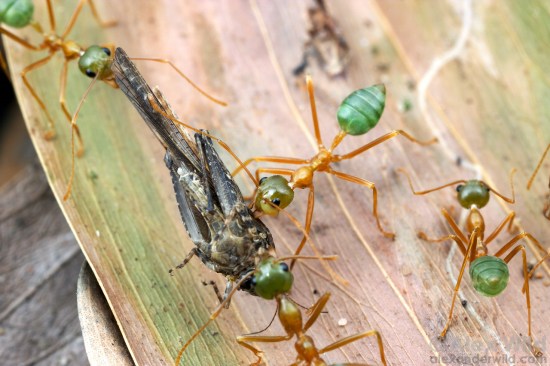
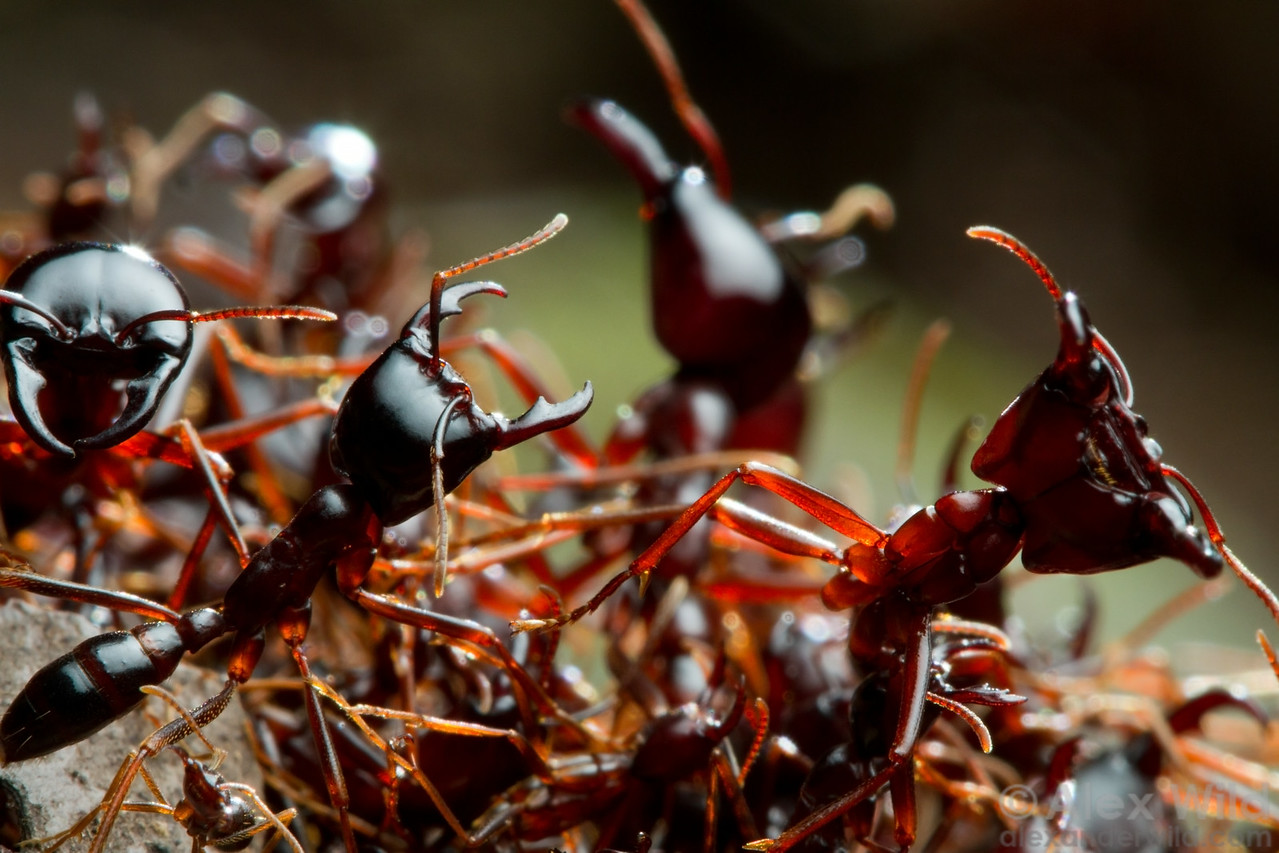
    oecophylla2-x2
    Ants and the grasshopper. Image: Alex Wild

    What I wish to argue now is that the above reasoning is specious. It cannot be argued that the ants have no obligation to aid the grasshopper, who is in danger of starvation, on the grounds that he is the one to blame for the dire situation he’s in. That argument, I will try to show, is circular.

    What is supposed to explain the claim that the grasshopper is responsible for the dire straits he now finds himself in? Well, he didn’t have to spend the summer playing his fiddle; and moreover, he knew, or should have known, that by choosing to spend the summer playing his fiddle rather than collecting food, he would end up with nothing to eat come winter. But notice that this result is itself partly a product of the grasshopper being denied access to food that the ants have stored away. So, what justifies blaming the grasshopper for his empty stomach, rather than the ants?

    The answer, it might be said, is that the ants have no obligation to allow the grasshopper to eat the food they’ve gathered, and so the grasshopper could not have really expected to avoid starvation that way. Thus, the grasshopper really only has himself to blame. But this is where the circularity comes in. The answer to the question of why it is the grasshopper himself who is to blame for his lack of food assumes that the ants had no obligation to let the grasshopper have some of their food. But the argument above, which is supposed to show that the ants have no such obligation to aid the grasshopper, is itself premised on the claim that the grasshopper’s not having enough to eat is his own fault. Like army ants stuck in an ant mill, we’re going around in circles.

    Maybe, as a way out, we should hold the grasshopper responsible for his plight on the grounds that, regardless of whether the ants are within their rights to deny him food, the grasshopper should have foreseen and taken into account that this was in fact what was likely to happen. If this is enough to establish that he is therefore responsible for the consequences of their denial, then we can get the above argument going in a way that doesn’t already assume that the conclusion is true.

    But this line of reasoning is not defensible. It implies that one has no right against being treated in a certain way, so long as it was predictable that one would be treated in that way, given one’s choices. Suppose it is well-known that there is rampant sexism in a certain industry. If, despite this, a woman decides to enter this line of work, it would be morally perverse to hold that she has only herself to blame for any harassment or discrimination she experiences on the job. And it would be even more perverse to hold that she therefore has no right not to be treated in these ways.

    The idea that individuals should be forced to take responsibility for the consequences of their choices is commonly appealed to in support of an ideology according to which there is little to no social responsibility on the part of the community as a whole to provide for the welfare of its members. But this ignores the fact that the consequences associated with a person’s—or, I suppose I should say, a bug’s—choices depend in all sorts of ways on the choices made by other members of the community—e.g., the ants. In order to trace the responsibility for a given outcome back to some particular insect, then, we need to rely on a prior view about what sorts of things others are entitled to do or refuse to do. And this means that ideas about the value of holding individual grasshoppers responsible for their choices can’t be used to support or oppose any particular public scheme of rights and obligations concerning the distribution of resources. Our views about distributive justice have to come first—only then can we assign responsibility to private insects.



    uchv photoDr. Stephen White is an assistant professor of philosophy at Northwestern University, although this year he is visiting Princeton University as a faculty fellow at the University Center for Human Values (right next door to the University Center for Ant Values). Originally from Albuquerque, NM, Stephen considers his favorite book to be William and Emma Mackay’s classic Ants of New Mexico—despite never having read it, as it costs, like, $260. He is currently working on a project about the ethical responsibilities that individuals have when it comes to their participation in collective actions and practices.​

  • The Daily Ant hosts a weekly series, Philosophy Phridays, in which real philosophers share their thoughts at the intersection of ants and philosophy. This is the sixty-second contribution in the series, submitted by Dr. Carrie Jenkins.


    Twenty million sisters

    A colony of siafu or driver ants can be considered as a superorganism. Or an army, if you like your metaphors military. It typically consists of tens of millions of ants, all siblings (or half-siblings—the queens may take multiple male partners). Whatever its ontological status, a siafu colony is mobile. When food supplies run out in one location, the entire society will march in a vast column, along trenches prepared by soldiers and workers, to find new territory.

    siafu7-x2
    Driver ants on the move. Image: Alex Wild

    Siafu are terrifying, even to much larger creatures, with their Borg-like indifference to their individual fates, their overwhelming numbers, and their incredible co-ordination, the latter facilitated by pheromone-based communications that might as well be magic or telepathy for all we can do to imagine them. Visual appearance is of zero importance to the siafu; they are all sightless.

    The soldiers are all female. Huge and fierce, with great slicing pincers to kill prey, they feed their superfamily and defend against aggressors. The workers are all female. Complex and versatile, they can do anything. Scouting and transporting, digging and lifting, building and destroying. The queen is female. Not a leader or ruler—the ants have no need of such things—but a supermother to millions. A pure reproducer.

    A few males are born among the sisters, but do not remain in the colony as they have no function there. When sexually mature, however, they are recalled to civilization. They are drawn in by the pheromones of a queen on the move—that is, a queen in search of a mate, looking to set up a new colony.

    For a male driver ant to court a queen is dangerous. First, her retinue has to approve of him, and if they don’t, they will kill and eat him. On the other hand, if he is approved, his wings will be torn off. (He might actually help with this amputation.) The wings will then be eaten by workers, he’ll be taken to the queen and mated to her, and then he’ll die.

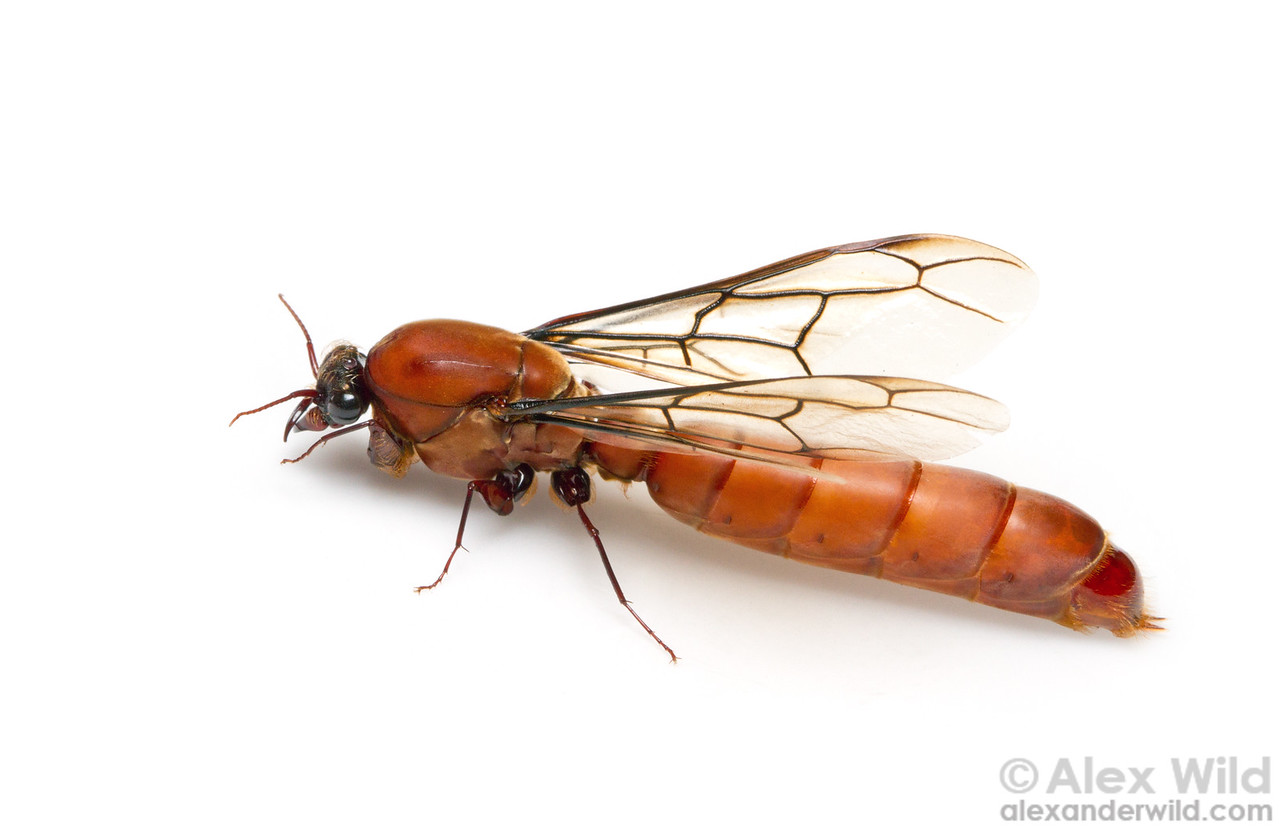
    dorylus2-x2
    A male driver ant, i.e. sperm package soon to die. Image: Alex Wild

    What is it like to be a driver ant? One might well wonder about their sensory experience, perhaps even more alien to us than that of the (philosophically overworked) bat. But my interest is more strongly drawn to another question: what is gender to these ants?

    The answer, I would suggest, is nothing. Sexual reproduction occurs, but there is absolutely no corresponding division of social roles. There is no male-gendered social role at all, in the sense that the entire society—the entire colony—is female. Every social role is performed by female ants. A male is a sperm delivery mechanism (and/or food). That’s it.

    I am coming to suspect that human societies, too, would be improved by discarding gender. I don’t mean that we should be like the siafu—function entirely without men (except in the sense that by discarding gender we’d be discarding men and women). What I mean is that, given the vastness and complexity of our social interrelationships, given our potential to operate in emergent patterns and undertake enterprises unimaginable to any one individual, given, in short, the kinds of superorganisms into which humanity is capable of forming itself, gender hinders rather than helps us.

    The ants teach us that the mere fact of being a sexually reproductive species delivers no conclusions about how, or even whether, gender should make itself manifest in our societies. In humans, the assignment of a gender limits us to certain modes of social behavior, appearance, and so on. In our current state of evolution and technological development, the vast majority of these limitations are unrelated to reproduction. Many of them—such as the suppression of emotion in boys and ambition in girls—are both individually damaging and socially disadvantageous (not to mention dangerous).

    On my optimistic days (there aren’t many of them, but they exist), I suspect humans are in the process of slowly shedding gender. If this is right, the crackdowns in gender policing that we see around us today—while terrifying—may be intensifying precisely because they are extinction bursts.

    Feminism itself can be considered as a human superorganism. Indeed, on first hearing the description of a driver ant colony as “twenty million sisters and a few males,” I was prompted to imagine the long, marching ant column as a symbol for feminist resistance through the centuries. Many individual soldiers and workers are lost along the way, but for all that the colony is strong, and headed where it needs to go.


    With thanks to the BBC Earth documentary Ant Attack for inspiration!


    screen shot 2018-11-26 at 11.40.01 amDr. Carrie Jenkins is a writer and philosophy professor based in Vancouver, Canada. She’s the author of What Love Is And What It Could Be, and is now working on a collection of poetic reimaginings of Plato’s Symposium with co-conspirator Dr. Carla Nappi. Her poem “Fourteen” from this project was a finalist for the Malahat Review 2018 Far Horizons Poetry Award.

  • It goes without saying that anybody who is anybody enjoys ants with all the human senses. Taste is no exception. Thankfully, the PBS culinary show “I’ll Have What Phil’s Having” appears to wholeheartedly agree! Ants are featured at the 38-minute mark in the very first episode of the show (many thanks to Film Critic Derek Langston for sending along this video):

    This is perhaps the greatest possible argument in favor of publicly-funded media!

  • Philosophy Phriday: Supercolonies and Overcoming Self-Other Aggression

    The Daily Ant hosts a weekly series, Philosophy Phridays, in which real philosophers share their thoughts at the intersection of ants and philosophy. This is the sixty-first contribution in the series, submitted by Dr. Nathan Eckstrand.


    Supercolonies and Overcoming Self-Other Aggression

    The ant documentaries I saw as a kid showed brutal fights. Antennae drawn and mandibles bared, ants bit and pulled on each other to defend themselves, gain access to food, or take over another colony. Other nature documentaries were much the same; animals constantly fought one another for self-defense, resources, or dominance. Seeing so much antagonism left my younger self with one, clear message: nature is a pitiless place devoid of much compassion.

    This type of interaction is often mirrored in how humans sometimes deal with each other, especially those we see as a threat. We often use violence, either to attack or for defense. We try to push others away rather than engage them, or dominate them so that they will obey us. As some philosophers would put it, we either want to reduce the Other (understood as the set of things that is not part of us) to the Self (that which is part of us) or ignore the Other by pretending there is only the Self. These tactics fail because most of our self-knowledge requires the existence of others. We learn about ourselves by looking to those around us. Research demonstrates this in several ways. First, Developmental Psychology says that a sense of self cannot exist until one understands that they occupy a specific place in the world, and thus their perceptions are not the only possible ones. Next, as children grow they begin to identify their perceptions of their body with themselves while identifying people’s faces as belonging to separate individuals capable of feeling the same sensations they do. Scientists believe that until such distinctions exist, no separation is made between oneself and the world. Finally, research shows that one’s self-knowledge comes in part from observing how others display emotions, prefer different things, and convey their desires. These facts show that having a concept of the self requires a concept of others, and that much of our knowledge about ourselves comes from observing different people. In a very real way, we exist only because others do.

    That said, we rarely want to be the same as others; rather, we want to have a distinct self and be recognized for this. Having a sense of self is meaningless if it is not recognized by others. In other words, we reject objectification in order to be seen as who we are, not as what others want us to be. The frustration we often have in receiving this recognition shows why denial and domination are common ways of responding to the Other. As long as we pretend the Other is not there, we don’t need to worry when they don’t acknowledge us.

    pilosula3-X2
    An attempt to deny exist-ants, perhaps. Image: Alex Wild

    Returning to the topic of ant behavior, myrmecology has uncovered some fascinating ways ants have overcome their initial rejections of the Other. The phenomenon of supercolonies shows ant nests ceasing hostility to work for a common goal. Ants within the same supercolony never act aggressively towards one another, preferring a more collaborative relationship. This is true even when ants are from different nests within the supercolony. (Scientists know that ants in a supercolony recognize when they are from different nests, for such ants will not mate with one another.) According to one study, “colonies harboring the most common recognition cues will experience a selective advantage because they fight less often with neighbors and are more productive.”1 Yet aggression does not disappear, as supercolonies can be hostile towards one another. Even if ants from different supercolonies are removed from their environment and placed in a lab, the aggression will continue, suggesting that it is produced by traits the ants recognize in each other.

    Some argue that supercolonies are not the byproduct of other natural forces, but are themselves advantageous enough that ants have recognized their value. If true, it means the loss of aggression is itself preferable, rather than it being the product of something else. As one paper puts it, “Although until now supercolonies were viewed as a byproduct of other processes, we propose that the adaptive value of avoiding the costs of aggression is so strong that under appropriate ecological conditions, it will promote the elimination of territorial aggression.”2 The authors conclude that a stronger role for cooperation seems to be forming within ant communities, which in turn is helping them to survive and grow.

    The development of supercolonies illustrates the preferred outcome that philosophers have described in reference to the Self-Other relationship. Ignoring the Other proves fruitless, for whether we like it or not we are always connected to them. Dominating the Other may have some limited success for a time, but it too will ultimately fail. Any attempt to make the Other into the Self removes from them the independence they need to recognize who you really are. Without the existence of an Other, you are only engaging in a process of self-description, not having your self affirmed by an external being with which you can interact. The only way to avoid these failed outcomes is for the Self and the Other to each recognize both parts of the relationship (i.e. both the Self and the Other). We must also admit that the Self and the Other are constantly interacting, whether we realize it or not.

    The phenomenon of supercolonies provides a nice vignette of the constant position we find ourselves in. While ants lack the concepts of Self and Other, they have recognized a danger of holding to a sense of Self and denying the Other. With supercolonies, they have begun to be more inclusive of ants with different backgrounds. We could learn something from this: there are many human groups that have trouble accepting others in a reciprocal relationship. Though ant fights have not disappeared, ants have overcome earlier groupings that separated them from others. Can we perform a similar move, and overcome the classifications that keep us from working together?


    1“Evolution of supercolonies: The Argentine ants of southern Europe”

    2Abandoning Aggression but Maintaining Self-Nonself Discrimination as a First Stage in Ant Supercolony Formation


    HeadshotNathan Eckstrand is a Visiting Assistant Professor at Fort Hays State University. Right now he is teaching in Zhengzhou, China, where some places are as crowded as an ant colony. He got his PhD from Duquesne University in 2014 after defending a dissertation on the philosophy of revolution (a concept he secretly wonders if ant workers ever contemplate). He specializes in social and political philosophy, race theory, gender theory, and continental philosophy. He is an Associate Editor at the APA Blog.
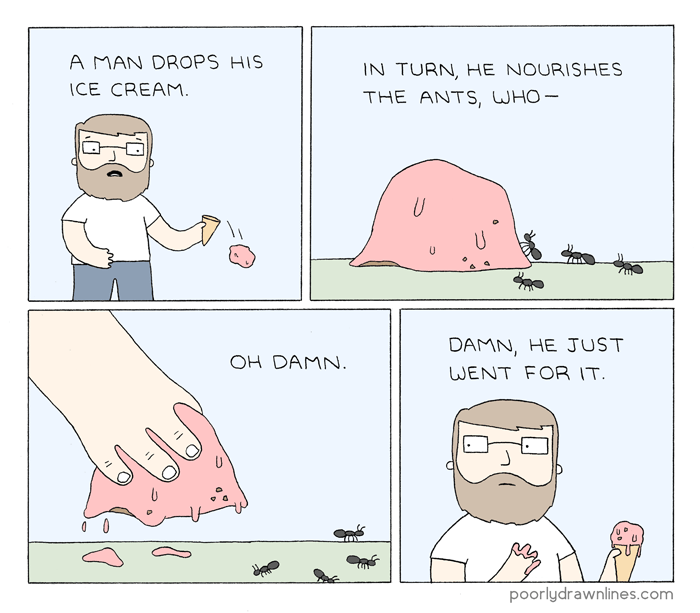
  • Worker Correspondant Jason Bates recently shared with us the following comic, by Poorly Drawn Lines, ironically titled “Symbiosis”:

    symbiosis

    Astute readers will notice that (1) this is a highly accurate depiction of the imbalanced relationship between man and ant, and (2) this is not the first time, nor even the second time, that we’ve featured an antspired comic by Poorly Drawn Lines. We’re ready to confidently declare Poorly Drawn Lines the most formicid-forward institution in the webcomic business.

  • Upset in Florida: Ant species wins big, collects skulls

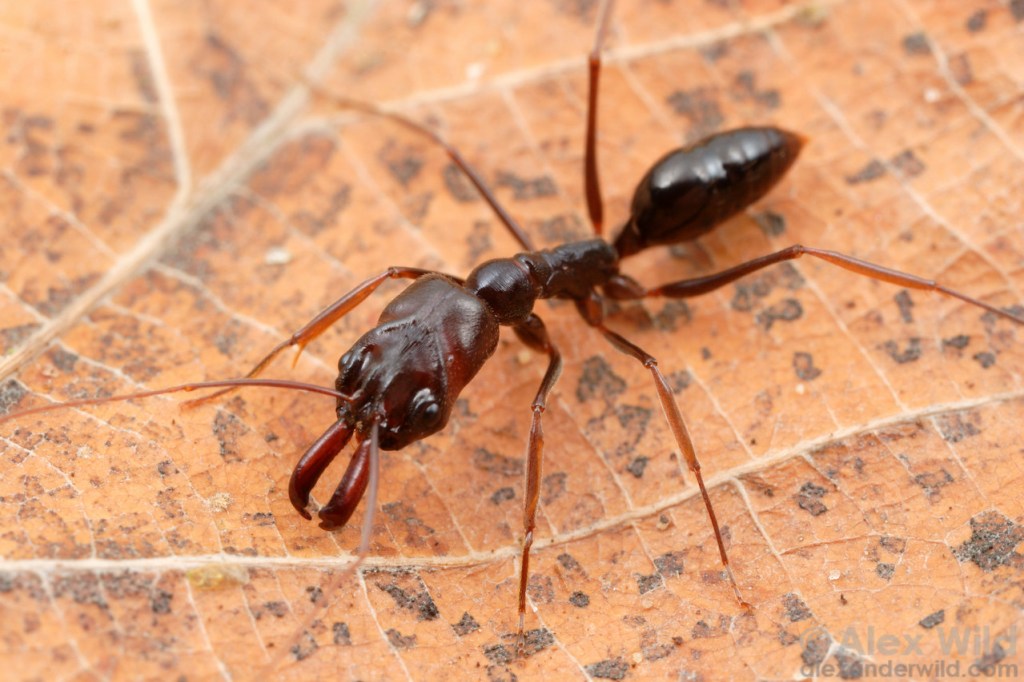
    This intimidating ant is a species in the genus Odontomachus:

    assininesis2-X2
    Image: Alex Wild

    Observe the powerful mandibles, the large eyes, the menacing form. Conventional wisdom must assume that such a fierce warrior is a natural winner in the horse ant race that is life.

    Get ready for the upset.

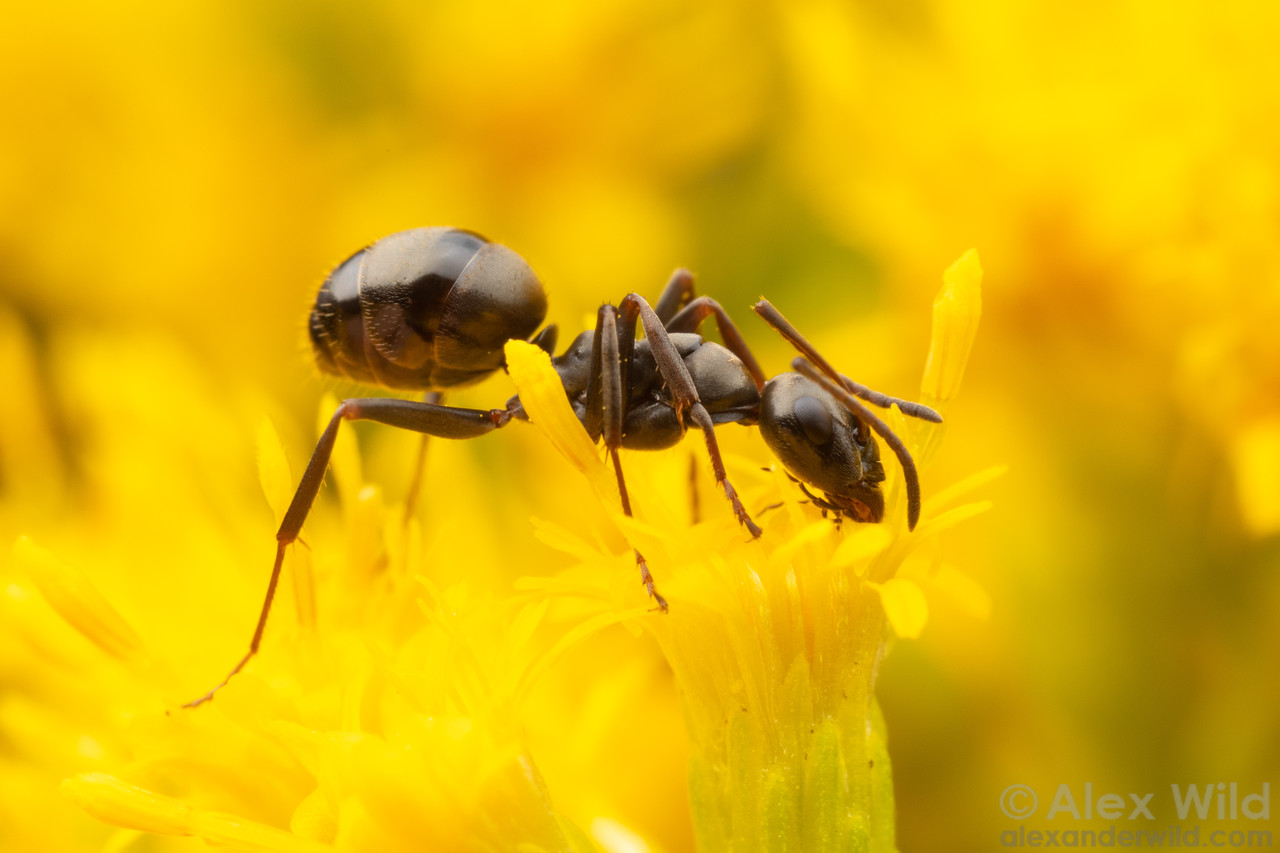
    This pleasant ant is a species in the genus Formica:

    Formica glacialis
    Image: Alex Wild

    Charm yourself with the squishy form, the nondescript appearance, the wilting flower demeanor. Think such an ant is a loser in life?

    Think again.

    Dr. Adrian Smith, head of the Evolutionary Biology & Behavior Research Lab at the North Carolina Museum of Natural Sciences & North Carolina State University, just released a remarkable video from his lab about new work on fights between Odontomachus and Formica ants… and let’s just say that Odontomachus is NOT the skull collector!


    Editor’s Note: YouTube Correspondant John Turner contributed to reporting.

  • Rutgers University Press Release Highlights Ant Research on Campus

    Earlier this week, a staff member at Rutgers – Camden Campus News reached out to The Daily Ant with an exciting press release. The release highlights the work of Sammy Schofield, a researcher and undergraduate student in Dr. Amy Savage lab:

    Schofield’s project examines how fine-scale habitat complexity affects the diversity of species of arthropods such as ants in high-stress environments. Schofield is monitoring the changing types and frequencies of arthropod species at stops along the NJ Transit River Line in Camden and Trenton. At each of eight locations, she observes one grassy section near a River Line stop in its natural state. Nearby, she lays down bricks in grassy areas to create a few patterns to observe what insects are attracted to the more complex patterns.

    Schofield further notes, as quoted in the release, that Camden is “a very good representation of a high-stress environment,” and that “[t]here’s constantly people coming in and out and there is always trash everywhere so I think it’s a very good indicator of a broader city pattern.”

    Needless to say, this research on ants (and other critters) is of direct importance to understanding drivers of insect diversity in cities, and possibly also instructive on how cities might be able to promote healthy insect diversity in the most anthropogenically-disturbed habitats in the world. Furthermore, we are thrilled to read that Schofield is a nontraditional college student, having taken a break in her college career for five years working as a barista. We believe that it is important that universities exist as big-colony institutions, promoting and supporting the work of students and researchers that have not followed “traditional” routes towards a given career. And of course, it’s even better if some interesting, impactful ant research flows from such support!

    Schofield-Samantha-2-looking-camera-1000x500
    Sammy Schofield, myrmecologist | Photo: Rutgers – Camden Campus News

    For now, keep your eye on this space – we’ll be sure to update our readers as soon as Schofield publishes her first manuscript on this work!

  • We already know that spiny ants are cool. But did you know that the first well-documented case of directed, intentional swimming by ants is in the spiny ant genus, Polyrhachis? Maybe we’re biased, but we think you will definitely want to watch this classic BBC Earth video of the ant-paddling Polyrhachis sokolova:


  • The Mother of Antvention

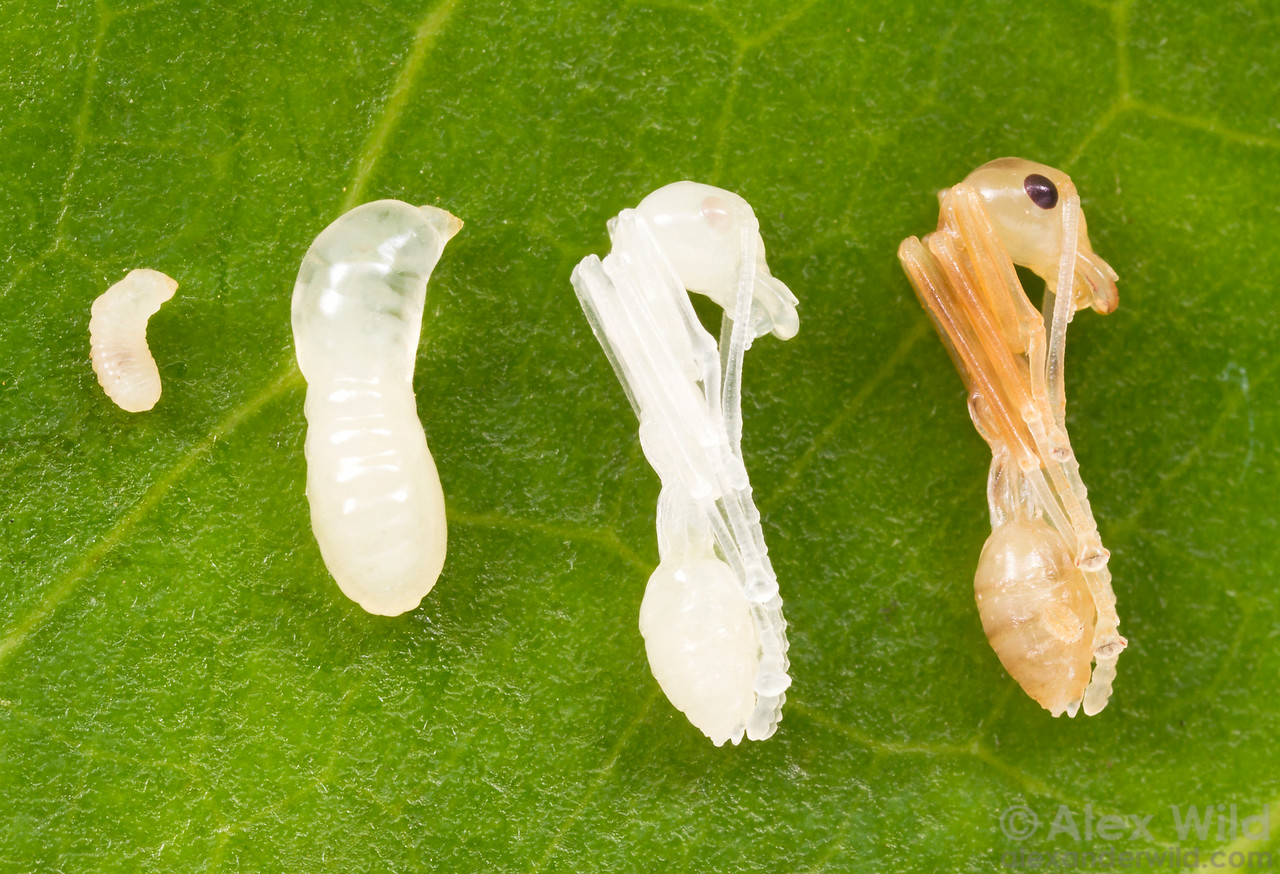
    Imagine that you are a mango farmer in Thailand. You’re happy with your mango crop, and happily head off to the market to sell your delicious fruit. There, you expect to sell out, but instead find that few passerby are interested in your produce. To add antsult to injury, you look at a nearby stall and see that larvae of the weaver ant, Oecophylla, are flying off the shelves! It seems that shoppers simply love the white, squishy, nutritious baby ants. What do you do?

    smaragdina30-X2
    Hungry yet? Image: Alex Wild

    If you’re a smart farmer, like the one featured below, you realize that weaver ants love nesting in mango trees, and you get to work attracting the hardworking insects to your farmland. Thailand Correspondant Pitoon Kongnoo shared this story with us, and sent along a report by Thai PBS on the antgenious farmer. The video is in Thai, but the footage is fairly self-explanatory even for those whose Thai is limited to “มด”. Enjoy!

  • The Daily Ant hosts a weekly series, Philosophy Phridays, in which real philosophers share their thoughts at the intersection of ants and philosophy. This is the sixtieth contribution in the series, submitted by Dr. Julia Driver.


    “While conducting research in Europe I came across the following, which I have transcribed from a manuscript found between the pages of an antiquarian book on household management entitled SELF GOVERNANCE.  It appears that this is [Bernard] Mandeville’s first attempt to convey his ideas via a fable or a parable.  This version was rejected in favor of THE FABLE OF THE BEES.  However, it is obviously the case that Mandeville also had great admiration for Ants.” — Julia Driver


    THE PARABLE OF THE ANTS
    THE Rustling Nest: OR, Virtue needs Vice

    A meand’ring nest, provision’d with ANTS
    Wandering thoughts, restless cants
    Engaged the idle, but virtue reigns
    Amongst the enterprising, peace obtains.
    Tho’ peace is weak that is not policed
    By those with hearts of avarice,
    Who plot and toil to guard the nest,
    For profit plain, forget the rest.

    The nest is only safe with fight,
    Greed and envy, keep the light,
    The snake will seek to ruin the nice
    The only guard a private VICE
    Our hero ant will seek its death
    And cry no tears, nor give him breath.

    Ants, industrious, straight, and wise,
    The nest, say sages, paradise.
    An even mix of good and mine
    The ANT sees, and all is fine.
    Suppose a nest in virtue grue
    And banish’d vice, became too few,
    Yet every part was full of virtue,
    The whole a chaos, without the glue
    Of avarice, cheats, emoluments,
    There was not an ant who whose own two cents
    Did not go to help his fellow ants,
    Til, alas, they helped each other dance,
    Each other to the very grave,
    By the hand of the invisible knave.

    Our VIRTUOUS nest is doomed to grieve
    For publick good requires to weave
    Some vice with virtue, so we say
    New sages, ANTS, present the way.

    Bernard Mandeville


    julia_anu_bwDr. Julia Driver is Professor of Philosophy at Washington University in St. Louis.  Her research interests lie in Ethics, Metaethics, and Moral Psychology.  She received her Ph.D. from The Johns Hopkins University. She is Vice-President, and President-Elect, of the Central Division of the American Philosophical Association. She is currently working on a book manuscript entitled Minimal Virtue.

  • Lovers of ant philosophy – that is, lovers of philosophy – will have noticed that our last Philosophy Phridays contribution was published on July 27th (an interesting piece on doubting ants by Dr. Andrew Moon). Such philosophy-lovers will be happy to hear that this time gap emphatically does NOT signal the death of our most world-famous series. In fact, we already have two upcoming contributions in the wings, and we’re confident you’re going to love them as much as you’ve loved each previous installment.

    Until next Phriday, we’re thrilled to announce that Philosophy Phridays was recently featured on the widely-read American Philosophical Association (APA) Blog! The focus of the piece, penned by our very own Editor-In-Chief Benjamin Blanchard, is on the exciting Philosophy Phridays Phriends of the Phield event hosted by The Daily Ant during the APA Central Meeting in Chicago in February. If you support ants, make sure to check out the story!

    (more…)

  • We’ve once again fallen rather silent for over two weeks, yet throughout the past month or so, our devoted readership has sent us a steady supply of premier ant content. Below, we present you a list of seven interesting items we almost allowed you to miss!

    (more…)